The question usually arrives loaded. Someone has seen a £22 bottle described as smelling like a £250 one and wants to know what the catch is.
Yes, they are good — genuinely, not as a consolation. But there are reasons that have nothing to do with luck, and a house style that will suit some people and not others.
First, the scale is bigger than people realise
Of the 170 brands we track, 59 are Middle Eastern — against 64 designer houses, 35 niche and 12 indie. This is not a fringe corner of the market. It is roughly a third of everything on our shelves, and several of these houses have catalogues larger than the designers they are compared with: 198 Lattafa fragrances, 183 Armaf, 165 Maison Alhambra.
That matters because it explains the manufacturing competence. These are not small operations reverse-engineering one bottle at a time. They are large fragrance companies with real production capability, selling into dozens of regulated markets.
Why they are good, structurally
The materials come from the same places
There are only a handful of companies making aroma chemicals at scale — Givaudan, dsm-firmenich, IFF, Symrise — and they sell to anyone with a purchase order. There is no designer tier of ingredients and a separate Gulf tier. The vanillin, ambroxan and hedione in a Lattafa came off the same production lines as the ones in a Dior. That shared supply chain is also why the safety question mostly answers itself.
Perfumery is native there, not imported
The Gulf has one of the oldest continuous fragrance cultures in the world. Oud, amber, musk and rose have been worn, traded and blended there for centuries, and wearing fragrance heavily and daily is normal rather than an enthusiast pursuit. These houses were not founded to copy Europeans; they were already making attar and oud-based perfume for a domestic market that takes it extremely seriously.
They skip almost everything you actually pay for
The concentrate in a luxury bottle is a small fraction of its retail price. The rest is research, celebrity advertising, licensing royalties, two layers of retail margin, luxury packaging and brand premium. A Gulf house selling direct and on Amazon carries almost none of it — which is where the ninety percent goes.
The evidence they compete on quality, not just price
Two findings from our own data are worth more than any general argument.
They target difficult fragrances, not easy ones. Across the originals being cloned, 91 come from designer houses and 83 from niche houses — nearly an even split. Cloning Sauvage is one thing. Reproducing Xerjoff, Roja, Amouage, Le Labo, Marc-Antoine Barrois and Frédéric Malle is a much harder technical problem, and it is roughly half of what these houses now attempt.
They hold their own on performance. We classified every pairing where an owner of both compared longevity directly: 27 favour the clone, 27 favour the original. A dead heat. The received wisdom that Gulf fragrances are cheap and fleeting is simply not supported — and where the clone loses, the original is usually a famous powerhouse.
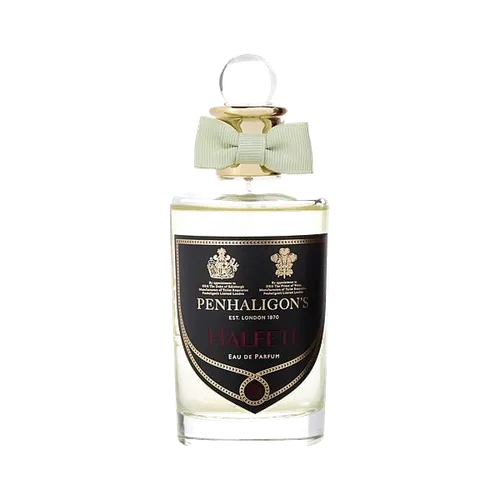
In blind tests they do better still. In a three-person blind comparison against Xerjoff Naxos, all three picked the Rayhaan. An owner's wife picked an Armaf over YSL Y and preferred it. A Penhaligon's Halfeti owner asked a wearer of the Rayhaan clone whether he had the real thing.
The house style, which you should know before buying
This is the part that decides whether you will like them, and it is a genuine difference rather than a flaw.
They run sweeter and denser. Across 322 owner comparisons, 34 describe the clone as sweeter than its original and almost none say the reverse. That is partly cost — sweet gourmand materials are cheap and tenacious — and partly taste, because the domestic market genuinely prefers it that way.
They project harder and last longer, as a rule, than European fragrances of the same genre. In a culture where fragrance is worn generously, that is a feature. In a small British office, it can be too much. The sweetness and the density together are why some people get headaches from clones and not from designers.
The openings are rougher. Forty-seven of our comparisons mention a harsher or more synthetic first ten minutes. Top notes lean on expensive materials and are the first thing economised on. Most of the gap closes within the hour.
They need time. Gulf houses ship fast, so bottles frequently arrive unmacerated and improve substantially over the following weeks — an effect large enough to explain a lot of bad first impressions.
Where to start
- Best overall record at scale: Maison Alhambra — 48% of 46 tracked dupes land, though performance is the recurring catch.
- Best accuracy: French Avenue, 67% across 18, aiming at hard niche targets.
- Best for original compositions rather than copies: Lattafa. Their famous bottles — Yara, Fakhar and Khamrah — are their own work, and picking between them is its own question.
- The single most famous: Armaf Club de Nuit Intense Man against Aventus, the bottle that arguably created this market.
The short version
Middle Eastern fragrance is good because it is a mature industry using the same materials with a fraction of the overhead, working in a fragrance tradition older than the houses it is compared to. It punches above its price because the price was never mostly about the perfume.
The real question is whether the house style suits you — sweeter, denser, louder, rougher at the start. If it does, there is very little reason to pay ten times more.
Related reading
- Who owns whom — the map of which houses are actually related.
- Clone houses ranked — hit rates across 19 of them.
- Are clones as good as the originals? — nine dimensions, scored.
- Arabic perfume for beginners — where to start if this is your first Gulf bottle.
- Afnan — the house that gets overlooked between Lattafa and Armaf.
- Al Haramain — Amber Oud, L'Aventure and the rest of a range that mostly is not cloning anything.