It is a common enough complaint to be worth taking seriously. Someone switches to clones, and within a few weeks reports headaches they did not get from their designer bottles. The natural conclusion is that something cheap and nasty is in the juice.
That is almost never what is happening. Fragrance headaches are real and unpleasant, but the mechanism is well understood, and when clones trigger them more often the cause is usually something the low price creates rather than something the formula contains.
First, what a fragrance headache actually is
It is rarely an allergy. A true fragrance allergy is a skin reaction — contact dermatitis, redness, itching where the product touched you — and it does not present as a headache.
What you are experiencing is an irritant response, mediated largely by the trigeminal nerve, which detects chemical irritation in the nose and airways independently of the smell receptors. Volatile compounds at sufficient concentration stimulate it, and the result is head pain, sinus pressure and nausea. Some people are far more sensitive to this than others, and for migraine sufferers strong smells are among the best-documented triggers there is.
The important consequence: this is dose-dependent. It is driven by how much of the material reaches your airways, not only by which material it is. That single fact explains most of what follows.
Cause one, and it is the big one: you spray more
Here is the mechanism nobody warns you about, and it is created directly by the price.
When a bottle costs £250, you use two sprays and you use them carefully. When the same scent costs £22, that restraint evaporates. Six sprays, two of them on clothing, topped up at lunchtime. Nobody decides to do this; it happens because the cost of a spray fell by a factor of ten.
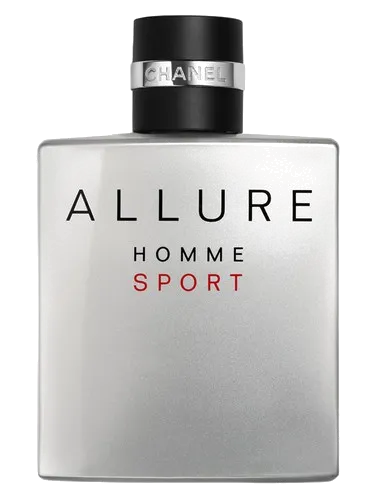
One of our own owner reports states the logic outright, comparing a Maison Alhambra clone of Chanel Allure Homme Sport: "at a fifth of the price you can spray freely." That is presented as a benefit, and in most respects it is. If you are prone to fragrance headaches, it is also the entire problem.
The clone did not become more irritating. You tripled the dose.
This one is worth testing before anything else. Wear your clone at two sprays for a week — the number you would have used on the expensive bottle — and see whether the headaches follow.
Cause two: clones skew sweet and dense
Across our 322 owner comparisons, 34 describe the clone as sweeter than the original. Almost none describe the reverse. This is a systematic bias, not a scatter.
The reasons are commercial and chemical. The Gulf market these houses primarily serve genuinely prefers sweeter, denser, longer-wearing fragrance. And the materials that deliver sweetness cheaply — vanillin, ethyl maltol, coumarin, benzoin — are powerful, tenacious and inexpensive, which makes them the efficient way to give a budget fragrance richness and staying power.
Heavy, sweet, dense gourmands are also, for a lot of people, the exact profile that brings on a headache. Vanilla-amber powerhouses are among the most commonly named triggers in the hobby, whatever the price.
So a clone can be more likely to give you a headache than its original without being lower quality — it has been adjusted toward a profile that happens to be harder on sensitive people. If your headaches are specific to gourmands and ouds and absent with fresh or citrus fragrances, this is your answer, and the fix is the genre rather than the price tier.
Cause three: an unmacerated bottle
Forty-seven of our comparisons describe a harsher, rougher or more synthetic opening on the clone. A meaningful share of that is not the formula at all — it is the bottle being young.
Clone houses ship within weeks of mixing where designer bottles typically spend months in distribution. A freshly filled fragrance has a sharp, solvent-forward opening that recedes as the composition settles. One clone in our set arrived as a "gasoline blast" and needed nearly six months to become what it was meant to be.
A sharp alcoholic opening is exactly the kind of thing that irritates airways. If your headache arrives in the first ten minutes after spraying and fades afterwards, try the same bottle in two months before concluding anything. Full detail in the maceration guide.
Cause four: a heavier synthetic load
This one is real, and it deserves a fair statement rather than either dismissal or alarm.
Budget fragrances lean harder on a small set of powerful aroma chemicals because they do a lot of work for very little money. Iso E Super, ambroxan, ethyl maltol and the woody amber musks are the usual load-bearing materials, and they are used generously where a designer composition might spread the effect across more, and more expensive, ingredients.
These are the same regulated materials designer houses use, at levels within IFRA limits, so this is not a contamination story. But some people are specifically sensitive to particular aroma chemicals — ambroxan and the woody ambers have a reputation for it — and a fragrance built heavily on one of those will affect them more than a composition where it is a supporting note.
The tell is consistency. If headaches follow one particular fragrance family across several brands, you have probably identified a material you react to, and it will be present in expensive bottles too.
Cause five: none of the above
Worth ruling out before blaming the bottle:
- Enclosed spaces. Cars and small offices concentrate anything. The same two sprays that are fine outdoors can be genuinely unpleasant in a commute.
- Layering. Scented shower gel, deodorant, moisturiser and fragrance stack up, and people rarely count the first three.
- Dehydration, hunger and screen time. Headaches are overdetermined. Fragrance is memorable and easy to blame.
- Wearing it too close to your face. Neck and collar sprays put the source directly under your nose for hours. Wrists and chest are gentler.
What to actually do
- Cut to two sprays and hold there for a week. This alone resolves the majority of cases, and it costs nothing to test.
- Spray clothing rather than skin. Fabric releases fragrance more slowly and does not warm it against your body.
- Let new bottles sit six to eight weeks before judging them.
- Track the family, not the brand. Note whether your headaches follow gourmands, ouds or ambers across price tiers. If they do, it is the genre.
- Switch profile before switching tier. Fresh, citrus and light aquatic clones are much less likely to trigger this than heavy sweet ones — and, usefully, they are also where clones most often match their originals on performance.
- If it is one specific bottle and nothing else, stop wearing it. No fragrance is worth a recurring headache, at any price.
The short version
Clone perfumes are not more likely to give you a headache because of what is in them. They are more likely because of how much of it you use, and because the house style leans sweet and dense in a way that a lot of sensitive people struggle with.
Both are fixable without giving up on clones. Spray less, wait for the bottle to settle, and pick fresher genres if heavy gourmands are your trigger.
On what is actually in these bottles, see are clone perfumes safe to wear.