The worry is understandable. A fragrance that costs a fifteenth of the original must be cutting corners somewhere, and it is reasonable to wonder whether the corner being cut is the one protecting your skin.
The honest answer is that the meaningful safety line does not run between clones and originals. It runs between regulated product and unregulated product, and most clone fragrances sit firmly on the regulated side.
The materials come from the same places
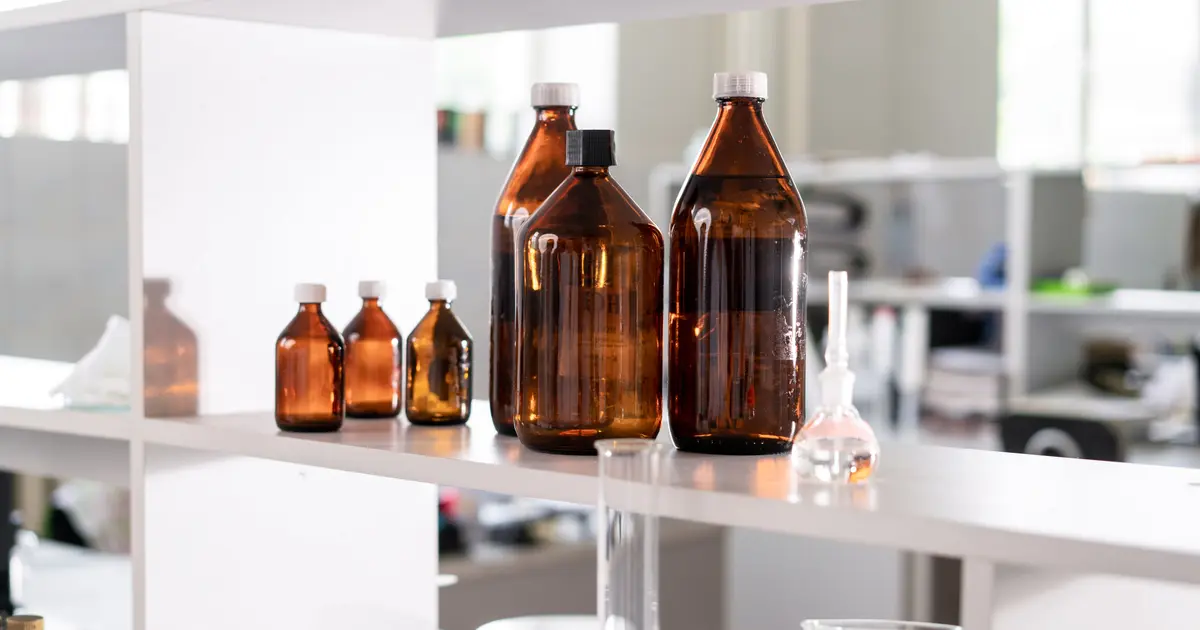
This surprises people, so it is worth stating plainly. There are only a handful of companies in the world that manufacture aroma chemicals at scale — Givaudan, Firmenich (now dsm-firmenich), IFF and Symrise account for the great majority of the global supply.
They sell to everyone. There is no designer tier of ingredients and a separate clone tier. When Lattafa or Maison Alhambra builds a fragrance, the vanillin, the Iso E Super, the ambroxan and the hedione come from the same production lines that supply Dior and Chanel. Aroma chemicals are commodities, and identical molecules behave identically on skin regardless of who bought them.
What genuinely differs is grade and proportion — a cheaper, less refined version of a material, less of the expensive naturals, more of the cheap synthetics that do similar work. That is a quality difference and a smell difference. It is not, by itself, a safety difference.
The rules apply to them too
The larger clone houses sell through Amazon, through European and American retail, and through physical distribution in dozens of countries. That is not a detail; it is the mechanism that makes them accountable.
To sell a cosmetic into the EU or UK, a product needs a Responsible Person, a product information file, a safety assessment by a qualified assessor, and notification on the CPNP or SCPN portal. It must declare all 26 named fragrance allergens above threshold on the label. In the United States, MoCRA has brought facility registration, product listing and adverse-event reporting into force. Nothing about these obligations exempts a fragrance for being inexpensive.
On top of that sits IFRA, the industry's own standards body, which sets usage limits — and outright bans — on materials with known sensitisation or toxicity concerns. IFRA compliance is technically voluntary, but suppliers, retailers and insurers all require it, which makes it effectively mandatory for anyone selling into mainstream distribution. It is the reason oakmoss was reformulated out of half the classics and why real nitro-musks disappeared decades ago.
A clone house selling on Amazon UK is inside all of this. So the practical question is not whether the bottle is a clone. It is whether it reached you through a channel where anyone was checking.
The actual risk: counterfeits, not clones
Where genuine danger exists, it is in counterfeit perfume — product that carries the original brand's name and branding and was made by nobody you can identify.
That supply chain answers to no one. There is no safety assessment, no allergen declaration, no IFRA compliance, no batch traceability and nobody to complain to. Testing of seized counterfeits has repeatedly turned up substances that have no business being in a cosmetic. This is exactly what an unregulated production line produces, and it has nothing to do with clone houses.
The confusion between the two is the single biggest reason people are nervous about clones. They are different products with different risk profiles, and we separated them properly in dupes versus fakes.
What wearers actually report
We hold 322 written comparisons of clones against their originals, from people who owned both. It is worth being precise about what shows up in them.
Twenty-two mention the clone smelling synthetic, harsh or chemical. Forty-seven mention a rougher opening. Those are consistent, real and frequently noted.
They are also aesthetic observations, not safety ones. "Smells synthetic" describes a fragrance built from cheaper materials with less skill in the blending. It does not describe a hazard, and every one of those materials is the same regulated aroma chemical a designer house would use in different proportions.
What we do not find is any pattern of reported skin reactions, irritation or physical symptoms. Across all 322 comparisons, not one raises it. That is not a clinical study and should not be read as one, but it is a large body of candid feedback from people with no reason to be diplomatic, and the absence is informative.
The one symptom people do report is headaches, and that has a specific and largely fixable set of causes — we treated it separately.
If you have sensitive skin
Fragrance is one of the most common causes of contact allergy in cosmetics, and that is true across every price tier. Chanel will give a sensitised person a reaction as readily as Lattafa will. The allergens are shared because the materials are shared.
Sensible practice, regardless of what you are buying:
- Patch test. A small amount on the inner forearm, left 24 hours. This is worth doing with any new fragrance.
- Spray on clothing rather than skin if you react easily. Fragrance performs well on fabric and often lasts longer there.
- Read the allergen list. If you know your triggers — linalool, limonene, eugenol, coumarin are common ones — they are declared on the box.
- Avoid broken or irritated skin, and be aware that bergamot and some citrus oils can be photosensitising in sunlight.
- Buy from channels with an ingredient list. If nobody will tell you what is in it, that is the answer.
A note on concentrated oils
Alcohol-free attar and perfume oil versions of clones are widely sold, and they need a different warning. They are far more concentrated than a spray, which means the aroma materials are applied to skin at much higher levels than the alcohol-based version delivers.
IFRA limits are expressed as concentrations in the finished product, so an undiluted oil applied neat can exceed what the same material would be permitted at in a spray. If you use them, use small amounts and patch test properly. This applies equally to designer and clone oils; it is a property of the format.
Five checks before you buy
- Is the manufacturer named on the bottle? A real house with a real trademark is accountable. An unbranded bottle is not.
- Is there a full ingredient list with allergens declared? This is legally required in most markets, and its absence tells you where the product came from.
- Is there a batch code? Traceability is a regulated-supply-chain marker.
- Does the seller pretend it is the original? If so it is a counterfeit and everything above stops applying.
- Does it smell like solvent? Usually this is just an unmacerated bottle rather than anything worrying — see the maceration guide — but a persistent chemical smell after months is a reason to stop wearing it.
The short version
Clone fragrances from established houses are about as safe as any other perfume, because they are made from the same regulated materials and sold under the same rules. The cost saving comes from skipping research, marketing and retail margin — not from skipping safety compliance, which is cheap relative to everything else and is enforced by the retailers they depend on.
Counterfeits are a genuinely different matter and worth avoiding entirely. And if you have a fragrance allergy, you have it at every price point.
For the wider picture, see are perfume dupes legal, safe and worth it.