Three questions come up before anyone buys their first clone, and the answers you find are usually a Reddit thread, a YouTube comment, or a shop that sells dupes telling you dupes are wonderful. Here they are answered properly — plus a fourth, for anyone thinking of selling them.
Why is it legal to copy a fragrance?
It is a fair thing to find confusing. A company reproduces a Tom Ford fragrance closely enough that owners of both struggle to tell them apart, sells it for a fifteenth of the price, lists it on Amazon — and nothing happens.
The answer is not that clone houses have found a clever workaround. It is that a smell is not the kind of thing intellectual property law protects. There is no loophole, because there is no wall.
- Copyright covers creative works fixed in a tangible form — text, music, images. Courts in most countries have declined to stretch it to a smell, because you cannot draw the edges of an accord in a way a court could enforce.
- Patents cover inventions. A genuinely new aroma molecule can be patented, and firms like Givaudan and Firmenich do patent them. But a finished fragrance is mostly built from materials that are decades old and sold openly to anyone with a purchase order.
- Trade secrets are what actually protect a formula. A trade secret stops people stealing your recipe. It does not stop someone smelling the result and working the recipe out themselves.
And that working-out is genuinely achievable. Gas chromatography–mass spectrometry will separate a fragrance into its components, and any competent perfumer can work backwards from there. The knowledge was never the barrier — though the readout is not a recipe, and the gap between the two is where clone quality is decided.
What is protected: the name, the logo, the bottle
So the smell is fair game. What is not fair game is everything around it.
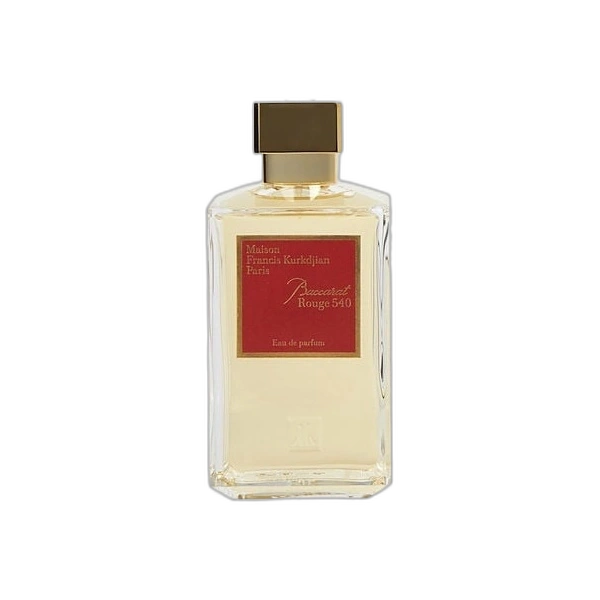
- Trademark covers the brand name and product name. "Sauvage", "Baccarat Rouge 540" and "Aventus" are registered marks. Putting them on your bottle is plain infringement, and it is the line between a legal clone and a counterfeit.
- Trade dress covers a distinctive bottle or box once shoppers link it to one brand — the Jean Paul Gaultier torso bottle, the Baccarat Rouge flacon. Copying a signature bottle is a real risk, which is why clone bottles are often ornate in ways that look nothing like their target.
- "Inspired by" sits in a narrower band. Naming someone else's product to describe your own is allowed in many places, including under US nominative fair use and the EU comparative advertising rules — as long as it is truthful, does not mislead about who made it, and does not take unfair advantage of the other brand's reputation. That last condition does a lot of work, and it is why retailers say "inspired by" freely while the manufacturers themselves usually say nothing at all — the phrase carries two meanings at once.
This is why clone names are so odd
Once you see the line, the naming stops looking random and starts looking like legal engineering:
| Clone | Target | The move |
|---|---|---|
| Fragrance World Renheit | Dior Fahrenheit | Drop two letters. Recognisable, not the mark. |
| Fragrance World Deux Cent Douze | Carolina Herrera 212 | Translate the number into French. |
| Maison Alhambra Como Moiselle | Coco Mademoiselle | Respell the rhythm, keep the sound. |
| Maison Alhambra Yeah | YSL Y | The letter, spelled as a word. |
| Maison Alhambra Toscano Leather | Tom Ford Tuscan Leather | Translate one word into Italian. |
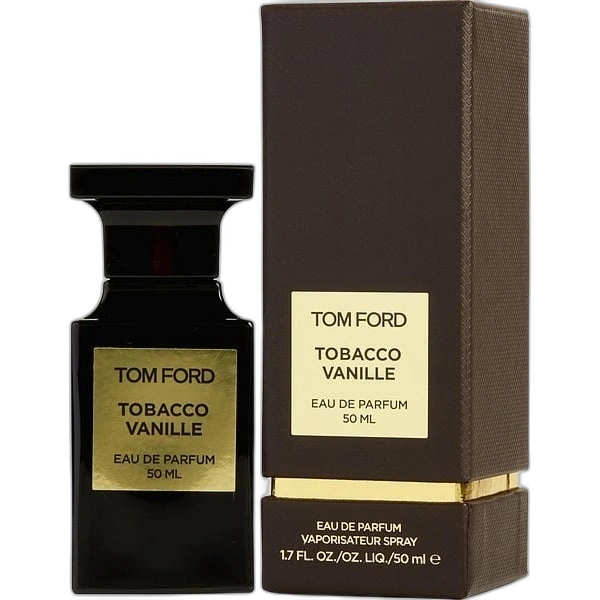
| Maison Alhambra Tobacco Touch | Tom Ford Tobacco Vanille | Keep the first word, swap the second. |
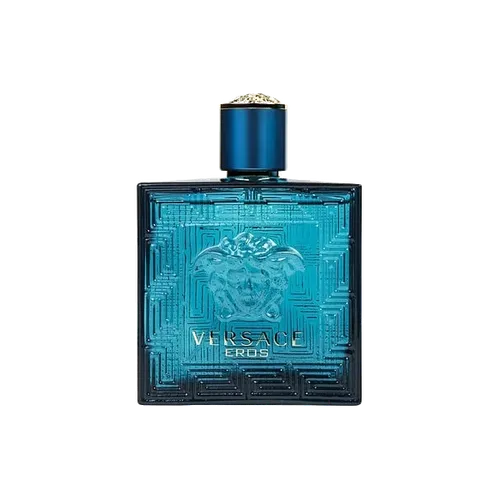
| Maison Alhambra Versencia | Versace Eros | A made-up word that hints without matching. |
Close enough that you know what it is. Different enough to be a different trademark. That is not laziness or poor English — it is the whole legal strategy in a word.
And some houses go over the line
Not all of them stay on the right side. When we searched our pairings in August 2026 for clones sold under the original's exact product name, five turned up:
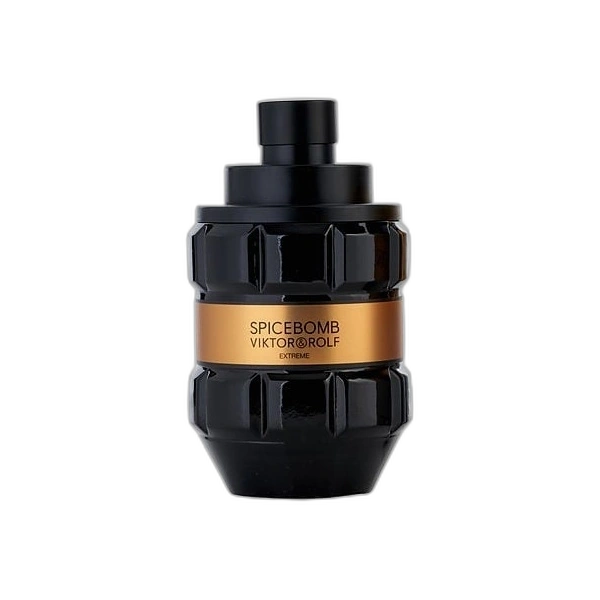
- Albait Aldimashqi Spicebomb Extreme — against Viktor & Rolf Spicebomb Extreme
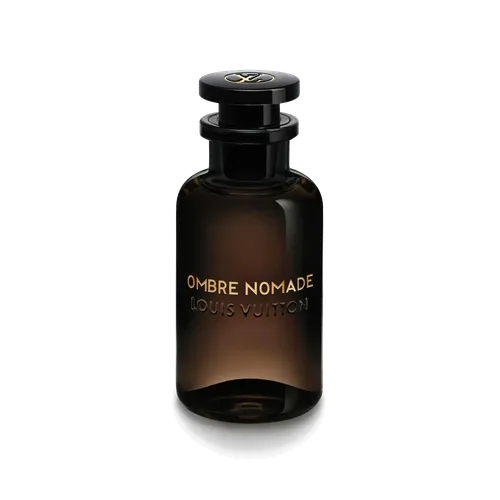
- Albait Aldimashqi Ombre Nomade — against Louis Vuitton Ombre Nomade
- Abraaj Viking and Fragrance World Abraaj Viking — against Creed Viking
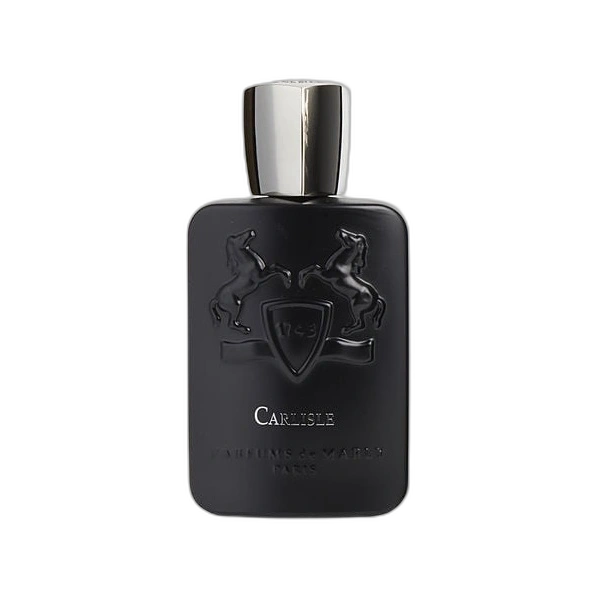
- Fragrance World Carlisle — against Parfums de Marly Carlisle
- Fragrance World Sedley — against Parfums de Marly Sedley
These are not equally exposed. "Viking", "Carlisle" and "Sedley" are ordinary words and place names — weak marks that are harder to enforce. "Spicebomb Extreme" and "Ombre Nomade" are invented names with no meaning outside the product, which is the strongest kind of trademark there is. Selling a fragrance under those exact names is not a grey area.
So why has nobody stopped them? Mostly distance and cost. Chasing small operators across the routes these houses sell through is slow and expensive. It is unenforced, not permitted — and it is exactly the sort of thing that gets a listing pulled when a brand does decide to act.
Dupes and fakes are not the same thing
This is the distinction that matters most, and it gets blurred constantly.
A dupe is an original product from a real company that happens to smell like something else. Lattafa is a large manufacturer selling Lattafa-branded bottles. Nobody is being deceived.
A fake is a bottle pretending to be the original — Creed's name, Creed's bottle, Creed's box, made in someone's garage. That is counterfeiting, it is a crime in essentially every country, and it is what enforcement actually targets.
Buying a dupe is ordinary shopping. Buying a fake means buying an unregulated product from a criminal operation, and you have no idea what is in it. They are often sold in the same corners of the internet, which is why the confusion lasts — we separated them properly in dupes versus fakes.
Is it legal to sell perfume dupes?
Wearing a clone raises no legal question at all. Selling one is a different matter. The short version: reselling properly made clone fragrances is lawful in most countries. Almost every problem sellers hit comes from how they describe them, repackage them or ship them — not from the product itself.
The product itself is fine
A Lattafa, Armaf or Maison Alhambra bottle is legally made goods. Once it is sold into the market, the first-sale rule (called exhaustion outside the US) means the trademark holder has no say over you reselling that bottle. You can resell it the way you can resell a book. That is why the clone houses themselves sell openly on Amazon and in mainstream shops in dozens of countries.
Where sellers actually get caught: the listing
This is by far the most common failure, and it is self-inflicted. "Inspired by Aventus" is a calculated risk, not a safe harbour — trading on the original's reputation is the entire pitch, and that is exactly what the "unfair advantage" condition above is about. It is why a Maison Alhambra box names nobody. Things that reliably cause trouble:
- Using the original brand's logo or imagery in your listing.
- Putting the original's trademark in your shop name, domain or product title.
- Stuffing designer names into listings or ad keywords.
- Anything that suggests you are an authorised seller of the original.
- Photographing your bottle next to the original's bottle.
The safest form is the one the clone houses already use: sell the product on its own name and let buyers make the connection.
Decanting is a separate business with separate rules
Splitting bottles into 5ml and 10ml samples is common, and it is where casual sellers most often step from reselling into manufacturing without noticing. The moment you open a bottle and repackage it, you are putting a new cosmetic product on the market under your own name. In the EU and UK that brings in the full Cosmetic Products Regulation: a Responsible Person, a product file, a safety assessment and CPNP or SCPN notification. In the US, MoCRA now asks for facility registration and product listing.
Nobody selling decants from a spare room is doing this. Enforcement usually follows a complaint or an injury, so the day-to-day risk is small — but a small chance of a large problem is still a real risk. Selling sealed bottles carries none of it.
Labels, shipping and marketplaces
- Labels. A sealed bottle should carry a full ingredient list with allergens, a batch code, the net quantity and a responsible-party address. If it does not, it is not compliant stock for your market, and reselling it makes that your problem. This doubles as a fake check — real clone houses print all of it, counterfeiters do not.
- Shipping. Perfume is alcohol-based and counts as a flammable liquid (UN 1266, class 3). That has nothing to do with dupes and everything to do with perfume. Air transport is restricted, many courier services ban it in their standard terms, and Royal Mail and USPS both limit it. Sellers who never think about trademark still get parcels refused for this.
- Marketplaces are stricter than the law. Amazon Brand Registry and eBay VeRO let brands report listings directly, and those reports are acted on fast with little checking. A perfectly lawful listing can still be removed, and repeat reports get accounts suspended. On a marketplace, a brand can end your business with a form.
If you are going to sell them
- Sell sealed, properly made bottles from named houses. Do not decant unless you have taken the cosmetics rules seriously.
- Sell the clone on its own name. "Lattafa Khamrah" is your product.
- Never use the original's logo, imagery or bottle in your listings.
- Keep the original's trademark out of your shop name, domain and titles.
- Check your supplier is not shipping counterfeits. This is the one that turns a business risk into a criminal one, and "I did not know" is a weaker defence than sellers expect.
- Sort out shipping before you list.
- Get local advice if this is a business rather than clearing out a collection.
One caveat covering everything above: this is general background, not legal advice, and details vary by country. The Netherlands and France have both produced rulings that treated a fragrance as possibly protectable, pulling in opposite directions from each other and from the US and UK view. Nothing has settled into a general rule, but "smells are never protectable anywhere" is too strong. If you are planning to sell rather than wear, get proper advice.
Are clone perfumes safe to wear?
Mostly yes, and the reason surprises people: clones and originals are largely built from the same materials, bought from the same suppliers.
A small number of fragrance houses — Givaudan, Firmenich, IFF, Symrise — supply the aroma chemicals for most of the industry. They sell to Dior and they sell to the company making Dior's clone. There is no separate, inferior chemical supply for cheap perfume. What the money buys in an expensive bottle is a higher proportion of costly naturals, more expensive fixatives, and more development time — not fundamentally safer ingredients.
The real safety variable is not price, it is who made it and whether they follow the standards. The IFRA standards set usage limits for known sensitisers, and any manufacturer exporting seriously into Europe has to comply with EU cosmetics regulation, including allergen labelling. The large Middle Eastern houses — Lattafa, Armaf, Maison Alhambra, Afnan, Rasasi — are substantial regulated exporters, not backroom operations.
Where genuine risk lives:
- Counterfeits, again. Unknown production, no compliance, no accountability. This is the actual danger, and it is not what "dupe" means.
- Concentrated oils and attars sold undiluted. Higher concentration means more of everything, including sensitisers. Treat these with more care than a standard EDP.
- Your own skin. Fragrance allergy is common and has nothing to do with price — plenty of people react to expensive perfume and not to cheap.
Sensible practice: buy from sellers who show batch codes and full ingredient lists, patch test on your inner arm if you are prone to reactions, and spray on skin rather than soaking clothes if you are unsure.
Are they actually worth it?
Here we can stop reasoning and use our own numbers. We track 548 dupe-to-original pairings (as of September 2026), each rated by how consistently people who smelled both agree the match lands:
| How consistently wearers agree | Pairings | Share |
|---|---|---|
| Widely agreed — the match is not really argued about | 145 | 26% |
| Commonly named — regularly cited, not unanimous | 260 | 47% |
| Debated — opinion genuinely splits | 143 | 26% |
About a quarter of dupes are the real thing. Half are in the neighbourhood. That is the honest expectation, and it is a long way from the "99% identical" language in the marketing.
The trade-off is almost always performance
Read enough comparisons and one sentence repeats under nearly every house: it smells right and it does not last.
Getting the opening close is cheap. What money buys in an original is the expensive base — the materials that hold a fragrance to skin for ten hours — and that is the first thing cut. Maison Alhambra's Lovely Cherie smells almost exactly like Lost Cherry and fades in an hour or two. Their Infini Musk is a dead ringer that gives you half an hour of projection. A 95% match that dies in two hours is not a contradiction — it is the most common outcome in our data.
When a dupe is clearly the better buy
- The original performs badly anyway. Every Pacific Chill clone outlasts Pacific Chill. When the expensive bottle is not built for longevity either, you are giving up very little.
- You want to test before committing. Wearing a close clone for a fortnight tells you more than three days with a sample.
- You want variety. Ten fragrances at £25 teaches you more about what you like than one at £250.
- The clone is genuinely preferred. It happens more than you would expect — one owner of the real Bianco Latte is on her fifth or sixth bottle of Lattafa Eclaire while the original sits unused.
When it is not
- Longevity is the point. If you need eight hours from a morning spray, this is exactly where clones give ground.
- You want the object. A heavy bottle and a boutique box are part of what you are buying, and no clone supplies them.
- You are buying on a marketing percentage. "95% match" is a number someone made up. Ours come from people who owned both.
The short version
Legal to buy: yes, because a smell is not protected — only names, logos and bottles are. Fakes are a different thing entirely and are illegal.
Legal to sell: yes for sealed bottles sold on their own names. The risk lives in leaning on someone else's trademark, in decanting, and in shipping.
Safe: broadly yes, from established houses, because they use the same materials from the same suppliers under the same regulations. Buy from real sellers, avoid counterfeits, patch test if you react to things.
Worth it: about a quarter of the time you get something genuinely close, and about half the time something in the neighbourhood. Staying power is a coin flip rather than a guaranteed loss — across every direct comparison we hold, the clone outlasted the original as often as it fell short. Buy accordingly — spray more, give new bottles time to macerate, and check what a specific bottle actually clones before you spend.