Buy three clones and you will end up confused about who made them. Is Maison Alhambra part of Lattafa? Is Armaf actually Middle Eastern? Why does the same fragrance appear under two names? Why does one Lattafa feel twice the quality of another?
The confusion is not your fault. This market looks like a hundred unrelated brands and is really a much smaller number of companies, each running several sub-lines that are marketed as though they were separate houses.
One honesty note before we start. Almost every company here is privately held, and none of them publish ownership structures. Some relationships are openly stated by the companies themselves; others are widely reported and unconfirmed; a few are simply unknown. This guide keeps those apart rather than presenting the lot as fact — and where something is not established, it says so.
The sub-line trap, which causes most of the confusion
Here is the thing almost nobody explains. Several of the "brands" you see on a shop shelf are not brands at all — they are ranges inside a larger catalogue. In our own database:
| House | Sub-line | Fragrances we hold |
|---|---|---|
| Lattafa | Lattafa Pride | 36 |
| Armaf | Club de Nuit | 19 |
| Paris Corner | Emir | 9 |
| Rasasi | Hawas | 9 |
| Paris Corner | Pendora Scents | 4 |
| Fragrance World | Barakkat | 4 |
| Paris Corner | North Stag | 3 |
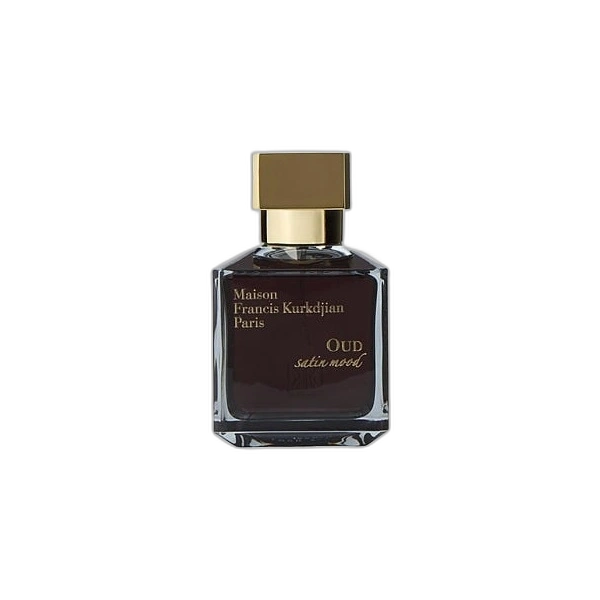
So when someone recommends "Emir Cedrat Essence", they are recommending a Paris Corner. When a shop lists "Pendora Scents" as its own brand, that is Paris Corner too. "Hawas" is not a house — it is Rasasi's most successful line. "Barakkat" is Fragrance World's Maison Francis Kurkdjian division, and as our Oud Satin Mood page shows, it is by some distance their best work.
This matters practically, because sub-line quality is not uniform. Lattafa Pride is generally a step above the base Lattafa range. Barakkat is far better than the average Fragrance World bottle. Judging a house by one bottle can mean judging it by its worst line, or its best.
Is Maison Alhambra part of Lattafa?
They are widely reported as sister brands, both based in the UAE, and they behave like one operation. Neither publishes a corporate structure, so treat this as the industry's settled understanding rather than a filing you can look up.
What is not in doubt is the scale. Between them they account for 85 of the 330 dupes we track — Maison Alhambra 46, Lattafa 39. More than a quarter of every documented clone pairing comes from these two names.
They also aim differently, which is the useful part. Maison Alhambra makes closer copies: 48% of its dupes land in the top agreement band against Lattafa's 31%. Lattafa makes a great many pleasant fragrances loosely inspired by expensive ones. Neither is better — they are different products, and knowing which you are buying sets your expectations correctly.
Is Armaf Middle Eastern?
Partly, and this is why the question keeps coming back. Armaf is the flagship brand of Sterling Parfums, a company with Indian roots operating out of the UAE. So it is a Gulf-market fragrance house without being an old Emirati perfumery in the way Ajmal or Swiss Arabian are.
For practical purposes it sits with the Middle Eastern clone houses: same market, same price bracket, same shelves. Its Club de Nuit line is the most famous clone range ever made.
The old houses are not clone houses
This distinction gets lost constantly, and it changes how you should read a brand.
Several names on the clone lists are long-established perfume companies that happen to also produce fragrances resembling Western ones. Ajmal dates to the 1950s. Al Haramain and Swiss Arabian to the 1970s. Rasasi to the end of that decade. These businesses were making oud, attars and traditional Arabian perfumery for decades before the Western clone market existed, and most of their catalogue still has nothing to do with cloning — which is easier to see once you read Al Haramain's range or Afnan's on their own terms.
Set against them, the clone-first houses — Maison Alhambra, Fragrance World, Bujairami, Montagne, French Avenue — are recent, built specifically for this demand.
The reason to care: an old house's dupe is usually a side project within a real perfumery tradition, while a clone-first house's dupe is the entire product. Neither guarantees quality. Rasasi's Hawas Black is excellent; plenty of clone-first bottles beat old-house attempts. But it explains why catalogues feel so different.
Why the same fragrance appears under two names
Because sometimes it literally is the same liquid. Fragrance World's B Satin Oud and Barakkat Satin Oud are the same juice, renamed for copyright reasons. If you have been comparing the two, you have been comparing one product.
Renaming happens for dull reasons — a trademark objection, a market-specific label, a distributor's preference. The lesson is simply not to assume two names mean two formulas, especially inside the same house.
How many houses are there really?
Our clone data alone spans 55 Middle Eastern brands, plus 10 independent Western houses (Dossier, Oakcha, Alexandria Fragrances, ALT and others) and a couple of designer names that turned up as clones of other designers.
Most of those 55 are small. The top six — Maison Alhambra, Lattafa, Fragrance World, Armaf, French Avenue, Paris Corner — account for 175 of 330 dupes, over half. The long tail is a lot of houses with one or two documented bottles each.
What to do with all this
- Check the sub-line, not just the brand. "A Lattafa" tells you less than "a Lattafa Pride". "A Fragrance World" tells you much less than "a Barakkat".
- Do not treat a new name as a new company. It is often a range from a house you already know.
- Do not assume two names are two products. Sometimes it is one bottle wearing two labels.
- Ignore brand loyalty when picking a specific dupe. Every large house here is beaten on at least one of its own targets by a smaller one — which is exactly what the page for each fragrance is for.
Related reading
- Clone houses ranked — ownership aside, which of these actually lands its dupes.
- Fragrance World: every clone identified — the full catalogue for one of the houses above.
- Dupes versus fakes — every house on this page makes the first kind.
- Are clone perfumes safe? — the question people are usually really asking about Gulf houses.