Every dupe list eventually fails you. You want a clone of something slightly obscure, or a recent release, or a flanker nobody has covered, and the lists stop.
So here is the method rather than the answer. This is genuinely how we build our own pairings — including the approach we tried first, believed in, and then deleted.
Start with what does not work
The obvious approach is to compare ingredient lists. Take the note pyramid of the expensive fragrance, find cheap fragrances with matching notes, rank by overlap. It is fast, it scales, and you can automate it across thousands of fragrances.
We built exactly that, ran it, and deleted the results.
It does not work, for a reason that becomes obvious in hindsight. Published note pyramids are marketing copy, not formulas — they are written to sound appealing and they routinely omit the materials doing the actual work. Two fragrances can share bergamot, vanilla and amber and smell nothing alike, because proportion, quality and the aroma chemicals nobody lists are what determine the smell. Conversely, a genuine dupe often has a different published pyramid from its target.
The scoring produced confident, plausible, wrong pairings. That is worse than no pairings, because it looks authoritative. If a dupe list is very large and very comprehensive, this is usually why.
What works: people who owned both
The only reliable evidence is someone who had both bottles and compared them on skin. Everything below is about finding those people.
Step 1 — search the right community
Reddit is where this evidence lives, specifically r/fragranceclones, with r/fragrance and r/DesignerReps as secondary sources. Fragrantica ranks constantly for these queries but its forum threads are far weaker evidence than a Reddit comparison thread.
Search Reddit directly rather than through Google. The single most productive query we have found:
<fragrance name> vs OG"OG" is the community's shorthand for the original, and it filters almost perfectly for the posts you want: people who own both, comparing. It beats "dupe", "clone" and "alternative", all of which return recommendation threads from people who own neither.
Also worth running:
<original> dupe— sorted by top, not by new<original> clone side by side<original> blind test— the highest-quality evidence there is
Step 2 — read the comments, never count the mentions
This is the step everyone gets wrong, and it is the difference between a good list and a bad one.
The most-repeated name is frequently not the best dupe. It is the one an influencer pushed. Our own data has a clean example: Arabiyat Prestige Marwa is the most-recommended clone of LV Imagination by a distance — and people who own both split hard on it. One blind battle makes it a joint winner; two other owners say the ginger is spicy, the performance poor, the neroli wrong.
Meanwhile Maison Alhambra Jean Lowe Immortel is widely quoted at "95%" against LV L'Immensité. Owners of both put it nearer seventy percent, and the community's own account is that the 95% figure originated with people who had never smelled the original.
A number that gets repeated is not a number that got verified. Weight a single comment from someone who owns both above fifty upvotes from people who own neither.
Step 3 — grade the evidence
Sort what you find into three tiers:
- Strong — a blind test, or a wrist-to-wrist comparison by an owner of both, or several independent owners agreeing.
- Medium — one credible owner report, or several consistent secondhand mentions.
- Weak — recommendation threads, shop listings, "I heard it's a dupe of", note-pyramid comparisons, and anything on a site selling the bottle. Watch the wording too: "inspired by" is a weaker claim than "clone".
Weak evidence is not a small amount of confidence. It is no confidence. Roughly one in eight of the pairings people confidently repeat turns out, on inspection, to be a different fragrance in the same family rather than a copy.
Step 4 — record the difference, not just the match
"It's a dupe of X" is nearly useless on its own. What you want is the sentence describing how it differs, because that is what tells you whether to buy it.
The differences cluster predictably. Across 322 owner comparisons we hold: 47 mention a harsher opening, 43 a difference in projection rather than scent, 34 that the clone runs sweeter, 24 that it needs maceration first, and 22 that the two converge after the opening. If your research turns up none of these, you probably have not found an owner of both.
Four pitfalls that will cost you money
- An unfindable bottle usually means the name is wrong. If you cannot find a fragrance anywhere, the likeliest explanation is a misspelling or a misremembered name, not that the product is obscure. We have had four rows in our own database that were simply named incorrectly, each caught by reading the label in a photograph.
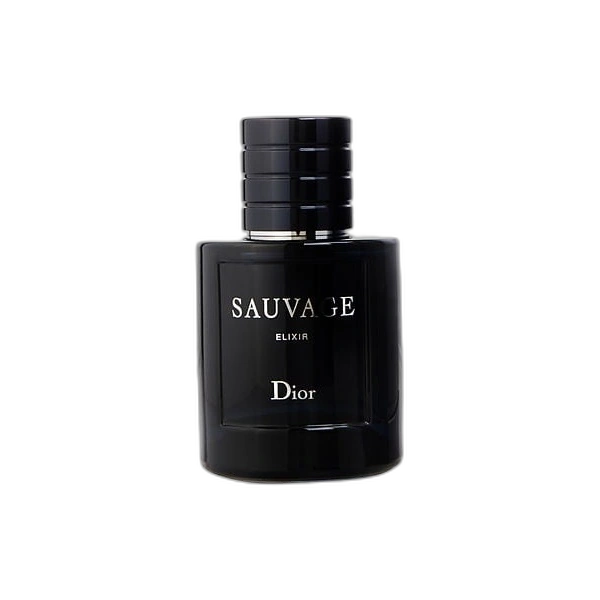
- Flankers are not the same fragrance. A clone of Sauvage is not a clone of Sauvage Elixir. Check which version is being compared — this is the single most common error in dupe lists.
- Retailers are not evidence. A shop claiming a bottle is a dupe of something famous is making a sales claim.
- Old threads describe old batches. Both clones and originals get reformulated. A four-year-old comparison may be describing two fragrances that no longer exist in that form.
Before you buy, check two things
Is the original a strong or weak performer? If it is famously long-lasting, expect the clone to fall short. If it is a known weak performer, the clone will very likely match or beat it — this is the best single predictor we have found.
And has anyone tested it blind? Blind comparisons are worth ten ordinary opinions, because knowing which bottle is expensive changes what people report smelling.
Or skip all of it
We have run this process across 330 pairings and 176 originals, every one traced to someone who owned both. If the fragrance you want is already in there, the work is done: start at the A–Z index.
If it is not, run the method above — and tell us what you find. Several of our most recent pairings came from readers.
Two worked examples of this method ending in "no", which is a normal result: Givenchy Gentleman, where seven of eight versions have nothing, and Abercrombie & Fitch, where the best-rated fragrance in the range has no clone and a lesser one has a famous one.
Related reading
- How dupes are actually made — the reverse-engineering side of the same question.
- Where to buy without getting scammed — once you know what you want.
- Are clones as good as the originals?