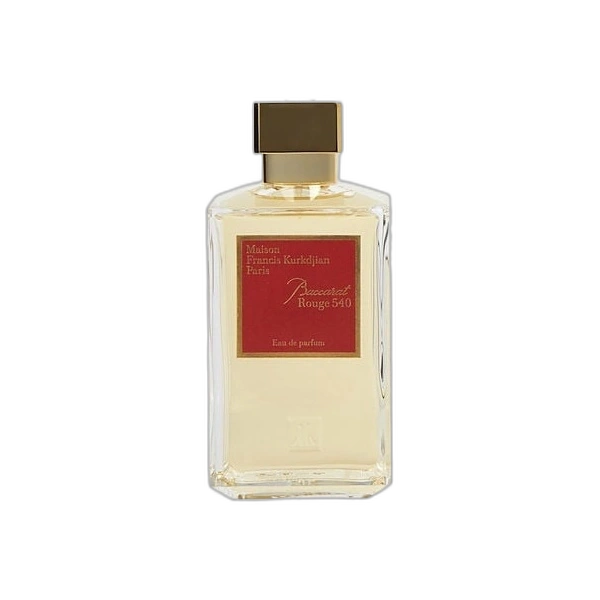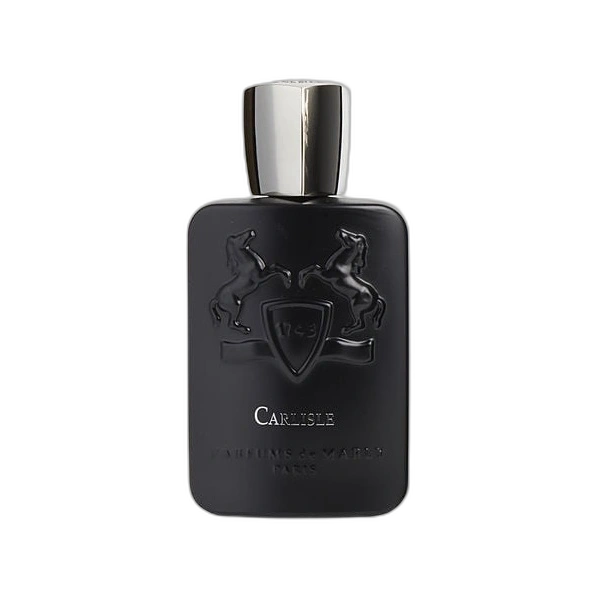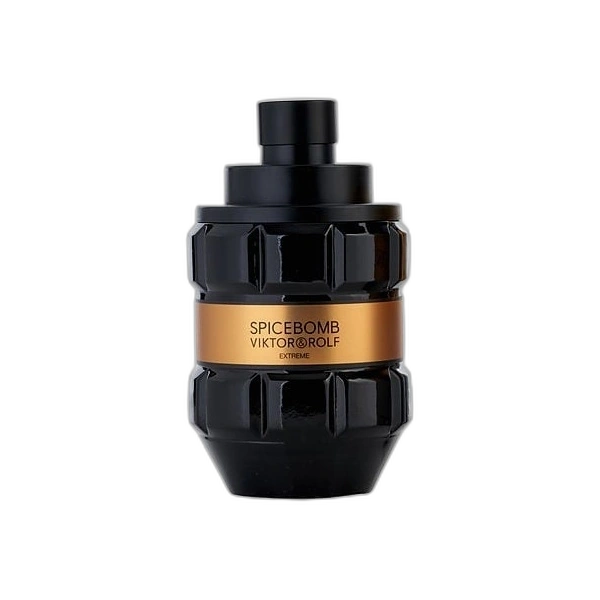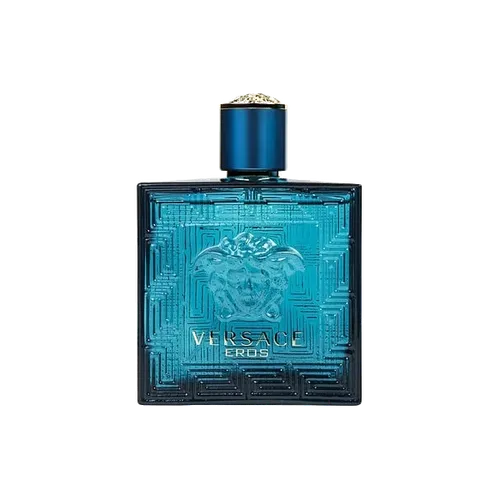
It is a fair thing to find confusing. A company reproduces a Tom Ford fragrance closely enough that owners of both struggle to tell them apart, sells it for a fifteenth of the price, ships it worldwide, lists it on Amazon — and nothing happens.
The answer is not that clone houses have found a clever workaround. It is that the thing they are copying was never protected in the first place.
A smell is not intellectual property
Intellectual property law protects specific categories of thing, and a scent does not comfortably sit in any of them.
Copyright covers original creative works fixed in a tangible medium — text, music, images, film. Courts in most jurisdictions have declined to extend it to a smell, on the practical ground that you cannot define the boundaries of the protected work. You can point to the exact notes of a song. You cannot point to the exact edges of an accord in a way a court could enforce.
Patents cover novel, non-obvious inventions. A genuinely new aroma molecule can be patented, and firms like Givaudan and Firmenich do patent them — that is why certain materials appear exclusively in one house''s work for a period. But a finished fragrance is overwhelmingly built from materials that are decades old and sold openly to anyone with a purchase order. The patented components are the exception.
Trade secrets are what actually protect a formula, and this is the crux. A trade secret prevents someone stealing your recipe. It does nothing whatever to stop someone smelling your product and working out the recipe themselves.
And that reverse-engineering is entirely achievable. Gas chromatography–mass spectrometry separates a fragrance into its constituent compounds and quantifies them. A competent perfumer takes that readout and reconstructs the blend. The knowledge was never the barrier.
So: copying a smell is legal because the smell itself is not owned by anyone. There is no loophole, because there is no wall.
What is protected: the name, the logo, the bottle
Everything around the fragrance is protected, and protected robustly.
Trademark covers the brand name and product name. "Sauvage", "Baccarat Rouge 540", "Aventus" are registered marks. Putting them on your bottle is straightforward infringement, and it is the line that separates a legal clone from a counterfeit.
Trade dress covers distinctive packaging and bottle design where those have become identified with a source. The Jean Paul Gaultier torso bottle and the Baccarat Rouge flacon are the sort of thing this protects. Reproducing a signature bottle shape is a real legal risk, and it is why clone bottles are often ornate in ways that look nothing like their target.
Comparative advertising — saying "inspired by X" or "our version of X" — sits in a narrower band. Referential use of someone else''s trademark to describe your own product is permitted in many jurisdictions, including under US nominative fair use and the EU comparative advertising directive, provided it is truthful, does not mislead about origin, and does not take unfair advantage of the mark''s reputation. That last clause is doing a lot of work, and it is why some retailers say "inspired by" freely while the manufacturers themselves usually say nothing at all — the phrase carries two meanings at once.
This is why clone names are so odd
Once you see the line, the naming conventions stop looking random and start looking like legal engineering. Sitting in our data:
| Clone | Target | The move |
|---|---|---|
| Fragrance World Renheit | Dior Fahrenheit | Drop two letters. Recognisable, not the mark. |
| Fragrance World Deux Cent Douze | Carolina Herrera 212 | Translate the number into French. |
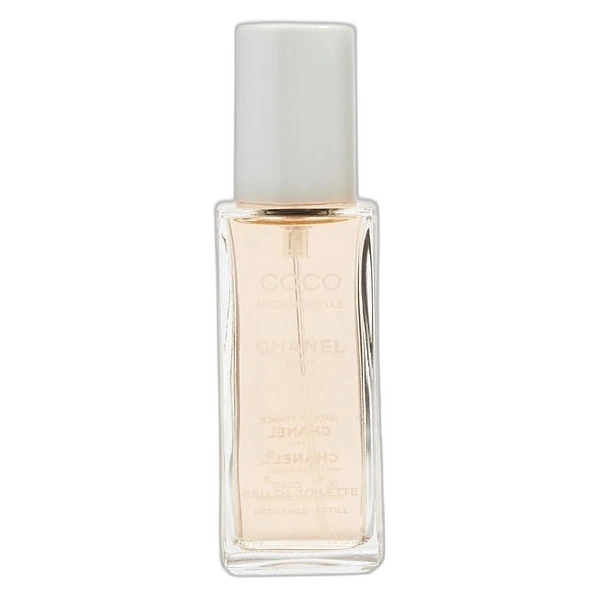
| Maison Alhambra Como Moiselle | Coco Mademoiselle | Respell the rhythm, keep the sound. |
| Maison Alhambra Yeah | YSL Y | The letter, spelled as a word. |
| Maison Alhambra Toscano Leather | Tom Ford Tuscan Leather | Translate one word into Italian. |
| Fragrance World Mark & Victor | Viktor & Rolf | Reverse and anglicise the names. |
| Maison Alhambra Versencia | Versace Eros | A portmanteau that evokes without matching. |
Every one of these is close enough that a buyer knows exactly what is being referenced, and different enough that it is not the registered mark. That is not laziness or poor English. It is the business model rendered in wordplay.
And some houses go over the line
Not all of them stay on the right side. Searching our 330 pairings for clones sold under the original''s exact product name turns up five:
- Albait Aldimashqi Spicebomb Extreme — against Viktor & Rolf Spicebomb Extreme
- Albait Aldimashqi Ombre Nomade — against Louis Vuitton Ombre Nomade
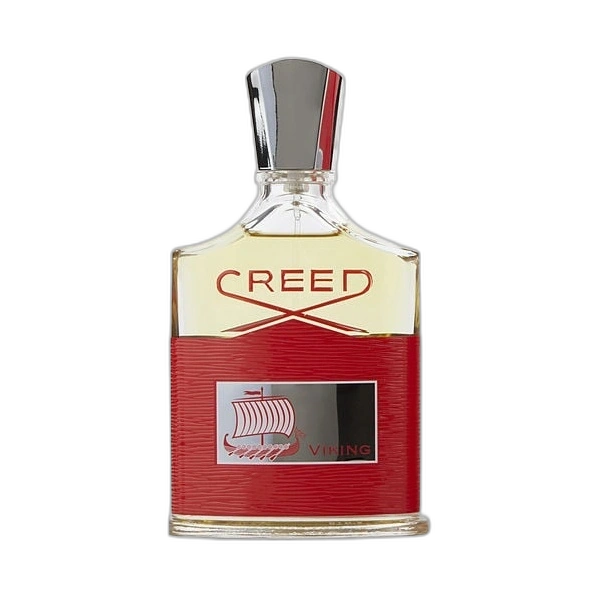
- Abraaj Viking and Fragrance World Abraaj Viking — against Creed Viking
- Fragrance World Carlisle — against Parfums de Marly Carlisle
- Fragrance World Sedley — against Parfums de Marly Sedley
These are not equally exposed. "Viking", "Carlisle" and "Sedley" are ordinary words and place names — weak marks, harder to enforce broadly, and a defendant has arguments available. "Spicebomb Extreme" and "Ombre Nomade" are coined, distinctive marks with no meaning outside the product, which is the strongest category of trademark there is. Selling a fragrance under those exact names is not a grey area.
Which raises the obvious question: why has nobody stopped them? Mostly jurisdiction and economics. Enforcement across the manufacturing and distribution routes these houses use is slow and expensive, and the marginal harm from one small operator is not worth the pursuit. It is unenforced, not permitted — and it is precisely the sort of thing that gets a listing removed when a brand does decide to act.
Legal clones are not counterfeits
This is the distinction that matters most and gets blurred constantly. A counterfeit puts the original''s branding on the bottle and lies to you about what you are buying. A clone puts its own branding on the bottle and competes on the smell.
One is fraud, prosecuted as such, and often produced with no safety oversight at all. The other is a legal product from a company that files its own trademarks and, in the case of the larger Gulf houses, operates at considerable scale.
They are frequently sold in the same corners of the internet, which is why the confusion persists. We separated them properly in dupes versus fakes.
Two honest caveats
This is a general explanation of how the law is structured, not legal advice, and two things complicate the tidy version above.
First, jurisdictions differ. The Netherlands and France have both produced decisions that treated a fragrance as potentially protectable, moving in opposite directions from each other and from the Anglo-American consensus. Nothing has settled into a workable general rule, but "smells are never protectable anywhere" is too strong a statement.
Second, selling is a different question from buying. Purchasing and wearing a clone is uncontroversial everywhere. Reselling, decanting or importing them commercially brings in a separate set of rules — see is it legal to sell perfume dupes.
The one-paragraph version
Copying a fragrance is legal because a smell cannot be owned — copyright will not cover it, patents cover only individual novel molecules, and a trade secret cannot survive someone reverse-engineering the finished product. What is owned is the name, the logo and the distinctive bottle. Clone houses copy the first and carefully avoid the second, and the strange names on their bottles are exactly where you can watch them doing it.
For the broader picture — safety, value, and whether any of it is worth doing — see are perfume dupes legal, safe and worth it.